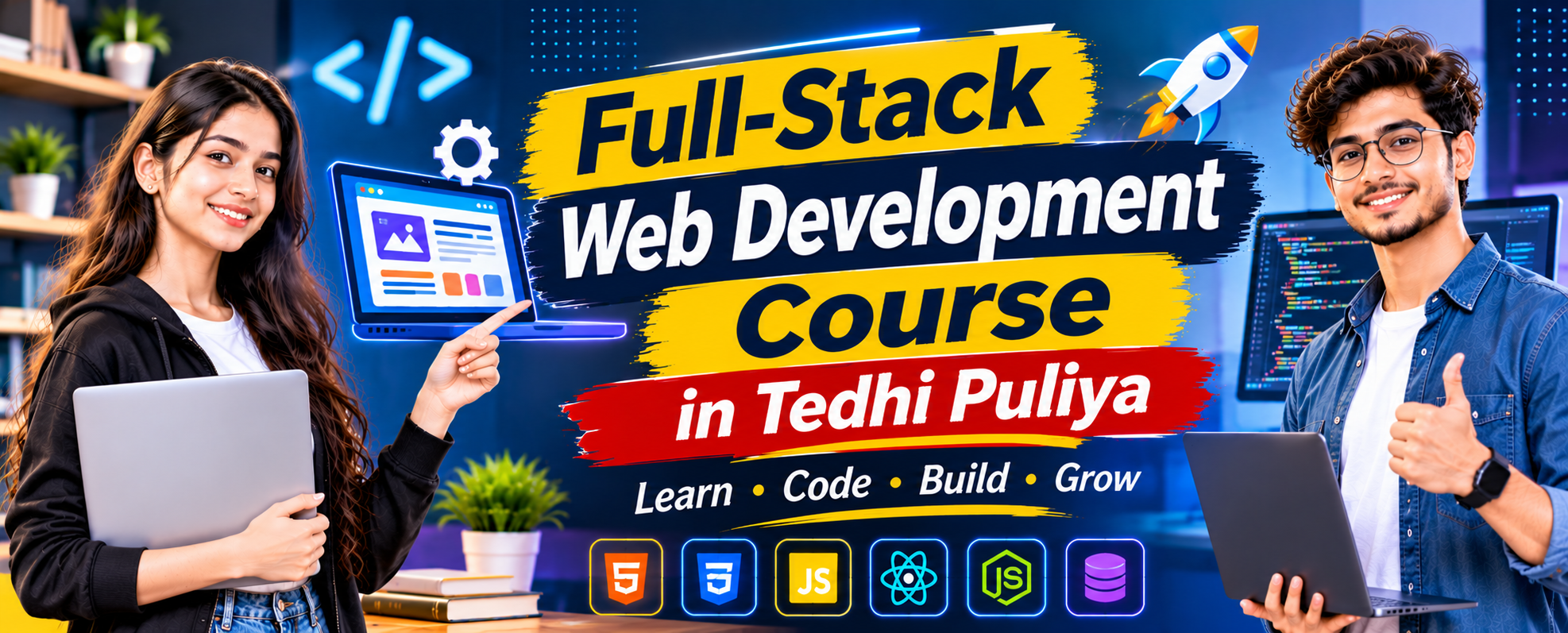
Full-Stack Web Development Course in Tedhi Pulia
Websites and web applications have become important for businesses, educational institutions, startups, and organizations. From business websites and online stores to booking platforms and management systems, companies need developers who understand how complete web applications work. Full-stack web development combines frontend and backend technologies to create functional, responsive, and interactive websites. If you want to develop these skills, a Full-stack web Development Course in Tedhi Puliya can help you understand the complete website development process.
Hanumant Technology provides technology-focused training for learners interested in building technical skills. If you are searching for Full-stack web Development Training in Tedhi Puliya, you can contact the institute to learn about the current syllabus, course duration, batch timings, fees, and practical learning opportunities.
What Is Full-Stack Web Development?
Full-stack web development involves working on both the frontend and backend of a website or application. The frontend is the part visitors see and interact with, including page layouts, menus, forms, images, and buttons. The backend manages application logic, databases, user accounts, and communication between different components.
Contact Us Now
A developer who understands both areas can contribute to building a complete web application. A structured Full-stack web Development Course in Tedhi Puliya should explain how these technologies connect and work together.
What You Can Learn in the Course
A well-organized Full-stack web Development Training in Tedhi Puliya may cover the following topics, depending on the selected syllabus:
- HTML: Creating the structure and content of web pages.
- CSS: Styling websites with layouts, colours, spacing, and responsive design.
- JavaScript: Adding interactivity and dynamic features to websites.
- Frontend development: Building user-friendly interfaces and reusable components.
- Backend development: Understanding server-side programming and application logic.
- Database management: Storing, retrieving, and managing application information.
- APIs: Connecting frontend interfaces with backend services.
- Git and GitHub: Managing code and tracking development changes.
- Testing and debugging: Finding errors and improving application performance.
- Deployment basics: Making completed websites or applications available online.
Before enrolling, ask a Full-stack web Development Institute in Tedhi Puliya for its latest syllabus and confirm which programming languages, frameworks, and tools are included.
Importance of Practical Projects
Practical experience is an important part of learning web development. Building projects helps learners understand how individual coding concepts work in real applications. During Full-stack web Development Coaching in Tedhi Puliya, ask whether the training includes assignments and guided projects.
Beginners can start with a personal portfolio website, a business website, or a contact form. Later, they can explore more advanced applications such as an online product catalogue, a blog platform, or a basic appointment-booking system. These projects can help learners practise frontend layouts, backend functionality, database operations, and form validation.
When comparing Full-stack web Development Training in Tedhi Puliya, check whether learners get opportunities to write code, test their work, and receive feedback from trainers.
Who Can Learn Full-Stack Web Development?
This course can be useful for students, graduates, beginners interested in programming, and working professionals who want to understand website development. Previous coding experience may be helpful, but beginners can start by learning HTML, CSS, and JavaScript fundamentals.
A suitable Full-stack web Development Course in Tedhi Puliya should introduce basic concepts before moving towards advanced programming. Learners should also develop problem-solving skills, logical thinking, and the habit of practising regularly.
Career Opportunities After Learning
Full-stack web development skills can be useful in software companies, IT services businesses, startups, web development agencies, and organizations that maintain digital platforms. Depending on your knowledge and practical experience, possible career paths include frontend developer, backend developer, junior full-stack developer, web developer, or application developer.
Completing a course does not automatically guarantee employment. Building a portfolio, understanding programming concepts, practising problem-solving, and preparing for technical interviews are also important. A Full-stack web Development Institute in Tedhi Puliya should clearly explain the course outcomes and any career guidance included in its program.
How to Choose the Right Training Institute
Before selecting a course, consider these points:
- Review the syllabus and check whether frontend and backend development are both covered.
- Ask which programming languages and frameworks are included.
- Understand how much time is dedicated to practical coding.
- Check whether assignments and complete website projects are provided.
- Ask about trainer support and doubt-clearing sessions.
- Confirm course duration, fees, batch timings, and learning format.
- Understand whether Git, databases, APIs, and deployment are included.
When comparing a Full-stack web Development Institute in Tedhi Puliya, focus on the teaching approach, practical activities, and syllabus rather than choosing only by the course title. You can also ask about Full-stack web Development Coaching in Tedhi Puliya to understand the learning format and available support.
Learn with Hanumant Technology
If you want to understand how complete websites and web applications are developed, explore the Full-stack web Development Course in Tedhi Puliya at Hanumant Technology. Discuss your learning goals with the team and request updated information about the syllabus, programming tools, practical sessions, and available batches.
You can enquire about Full-stack web Development Training in Tedhi Puliya to understand whether the program is suitable for beginners. If you are comparing a Full-stack web Development Institute in Tedhi Puliya, review its course structure and project opportunities. You may also ask whether Full-stack web Development Coaching in Tedhi Puliya matches your schedule and current skill level.
Before admission, confirm the details of Full-stack web Development Training in Tedhi Puliya and ask about the practical work included. Review the modules covered in Full-stack web Development Course in Tedhi Puliya and discuss your goals with a Full-stack web Development Institute in Tedhi Puliya. You can also ask about Full-stack web Development Coaching in Tedhi Puliya for guidance during your learning journey.
Regular coding practice, project development, and a clear understanding of programming fundamentals can help you build confidence as a developer. Visit Hanumant Technology's website to explore current course information.
FAQs Full-Stack Web Development Course in Tedhi Puliya
Q1. What is covered in the Full-Stack Web Development Course in Tedhi Puliya?
The course may cover HTML, CSS, JavaScript, frontend development, backend programming, databases, APIs, Git, and deployment basics.
Q2. What is full-stack web development?
Full-stack web development involves creating both the frontend and backend of websites and web applications.
Q3. Can beginners join a Full-Stack Web Development Course?
Yes, beginners can start with HTML, CSS, and JavaScript fundamentals before moving to advanced concepts.
Q4. Which technologies are taught in full-stack web development?
The syllabus may include HTML, CSS, JavaScript, frontend frameworks, backend technologies, databases, and APIs.
Q5. Will I get practical project experience during the course?
The course may include practical assignments and projects such as portfolio websites, business websites, and web applications.
Q6. Do I need programming knowledge before joining?
Previous programming knowledge is helpful but not essential for beginners who are ready to learn the fundamentals.
Q7. What is the difference between frontend and backend development?
Frontend development focuses on the visible and interactive parts of a website, while backend development manages server-side logic and data.
Q8. What career opportunities are available after learning full-stack development?
Depending on your skills and experience, you can explore roles such as web developer, frontend developer, backend developer, or junior full-stack developer.
Q9. How do I choose the right Full-Stack Web Development Institute?
Review the syllabus, programming tools, practical projects, trainer support, course duration, fees, and learning format.
Q10. How can I enquire about Full-Stack Web Development Training at Hanumant Technology?
Contact Hanumant Technology to ask about the latest syllabus, fees, batch timings, course duration, and practical learning opportunities.