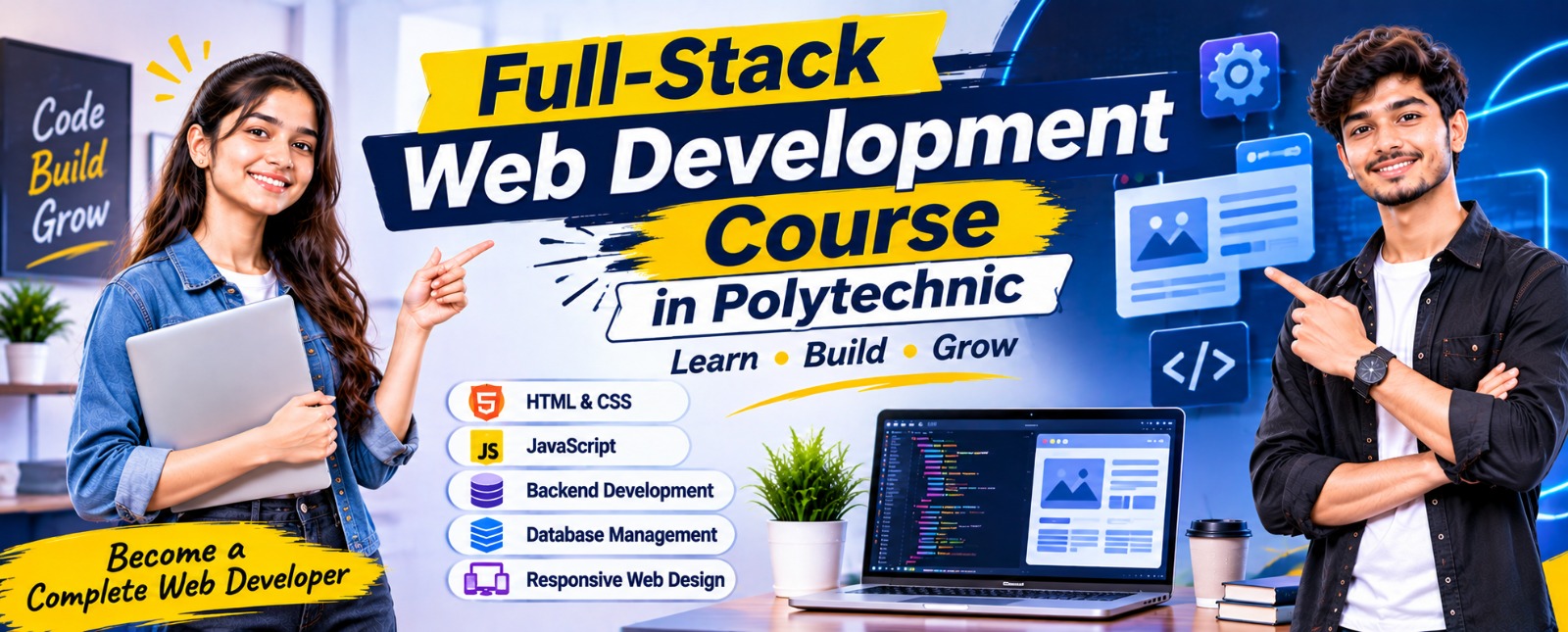
Full-stack Web Development Course in Polytechnic
Web development has become an important part of the digital industry. Businesses, educational institutions, startups and organisations use websites and web applications to provide information, manage services and connect with customers. Modern websites require both attractive designs and powerful functionality. Full-stack web development combines these two areas by covering frontend and backend technologies.
Students interested in building complete websites and applications can explore a Full-stack web Development Course in Polytechnic. Hanumant Technology, established in 2018, is an IT company and training institute focused on technology education and practical skill development. Learners searching for Full-stack web Development Training in Polytechnic can enquire about available programmes and understand how structured learning can help them develop technical knowledge.
What Is Full-stack Web Development?
Full-stack web development involves working on both the frontend and backend of a website or web application. The frontend is the part visitors see and interact with, while the backend manages server-side operations, application logic and data processing.
Contact Us Now
A Full-stack web Development Course in Polytechnic can introduce learners to the complete website development process. Students can understand how website layouts, interactive features, databases and server-side functionality work together.
Choosing Full-stack web Development Training in Polytechnic can help beginners explore different areas of development step by step. Learners can also contact a Full-stack web Development Institute in Polytechnic to enquire about syllabus details, practical sessions and the learning format. Students who prefer guided instruction can explore Full-stack web Development Coaching in Polytechnic to understand the available teaching support.
Frontend Development Skills
Frontend development focuses on the visual and interactive elements of a website. It helps developers create layouts that are attractive, accessible and easy to use. A frontend learning module may cover the following technologies:
- HTML: Used to create the structure of webpages with headings, paragraphs, images, links and forms.
- CSS: Helps control colours, typography, spacing, layouts and website appearance.
- JavaScript: Adds interactive features and dynamic behaviour to webpages.
- Responsive Design: Helps websites adjust to different screen sizes, including desktops, tablets and smartphones.
During Full-stack web Development Training in Polytechnic, learners can practise building webpage layouts and adding interactive elements. A practical Full-stack web Development Course in Polytechnic should encourage students to apply these concepts through assignments and small projects.
Backend Development and Database Concepts
Backend development manages the functionality that operates behind a website. It handles application logic, user requests, data processing and communication with databases. Understanding backend concepts is important for anyone interested in developing complete web applications.
Depending on the syllabus, students may explore server-side programming, APIs, database operations and application structure. Database fundamentals help developers store, organise, update and retrieve information efficiently.
Learners considering Full-stack web Development Training in Polytechnic should enquire about the backend technologies included in the current syllabus. A Full-stack web Development Institute in Polytechnic should explain the learning modules clearly so students can understand what they will practise.
Guided Full-stack web Development Coaching in Polytechnic can also help learners understand programming logic, database concepts and common development challenges.
Importance of Practical Projects
Practical projects help students understand how frontend and backend technologies work together. Instead of learning every concept separately, learners can apply their knowledge to create complete website projects.
Some useful beginner-level projects include:
- Personal portfolio website
- Business website with multiple pages
- Responsive landing page
- Student registration system
- Product listing website
- Basic database-connected web application
Working on these projects can improve coding practice, logical thinking and problem-solving abilities. Students looking for a Full-stack web Development Institute in Polytechnic should ask whether the programme includes practical assignments and project guidance.
A structured Full-stack web Development Course in Polytechnic can help learners understand the development process from planning and designing to testing and improving a website. Regular practice during Full-stack web Development Training in Polytechnic can also help students become more confident with development tasks.
Who Can Learn Full-stack Web Development?
Full-stack web development can be explored by beginners and learners from different educational backgrounds. An interest in computers, technology and problem-solving can provide a useful starting point.
A Full-stack web Development Course in Polytechnic may be suitable for:
- College students interested in the IT industry.
- Graduates looking to develop technical skills.
- Beginners interested in website creation.
- Working professionals exploring web technologies.
- Freelancers interested in website development projects.
- Entrepreneurs who want to understand how web applications work.
Before selecting Full-stack web Development Coaching in Polytechnic, learners should compare the syllabus, duration, fees, practical sessions and teaching format. Enquiring with a Full-stack web Development Institute in Polytechnic can help them understand the available learning arrangements.
Career Opportunities After Full-stack Web Development
Full-stack development skills can help learners explore different opportunities in the technology sector. Career options depend on technical knowledge, practical experience, project quality and employer requirements.
After developing relevant skills, learners may explore roles such as:
- Junior Full-stack Developer
- Frontend Developer
- Backend Developer
- Web Application Developer
- Website Developer
- Web Development Intern
Some learners may also explore freelance projects and develop websites for small businesses. A Full-stack web Development Course in Polytechnic can provide foundational knowledge, while practical projects can help students demonstrate their abilities.
Students interested in Full-stack web Development Training in Polytechnic should focus on building a portfolio and practising regularly. They can also enquire about Full-stack web Development Coaching in Polytechnic for guidance while learning difficult programming concepts.
Why Consider Hanumant Technology?
Hanumant Technology has been working in the IT and training sector since 2018. The organisation focuses on technology-related services and professional skill development. Students interested in full-stack development can contact the institute to enquire about current course availability and programme details.
Before enrolling, learners should confirm the syllabus, technologies covered, practical assignments, course duration, fees and batch schedules. Those searching for a Full-stack web Development Institute in Polytechnic can contact Hanumant Technology to discuss their learning requirements and understand the available options.
Students can also ask about Full-stack web Development Coaching in Polytechnic to understand the teaching approach and guidance available during the programme. Choosing the right learning structure can help beginners build their knowledge step by step.
Start Your Full-stack Development Journey
Learning full-stack development requires regular practice, patience and a willingness to solve technical problems. Start with HTML and CSS, develop JavaScript skills and gradually explore backend programming and database concepts. Building projects throughout the learning process can help connect these topics.
If you want to develop complete website creation skills, enquire about the Full-stack web Development Course in Polytechnic at Hanumant Technology. You can also ask about Full-stack web Development Training in Polytechnic, Full-stack web Development Institute in Polytechnic and Full-stack web Development Coaching in Polytechnic to understand current learning options.
Choose a programme that matches your goals, practise through real projects and keep improving your technical knowledge. With consistent effort and practical experience, full-stack web development can become a valuable skill for exploring opportunities in the IT industry.
FAQs Full-stack Web Development Course in Polytechnic
Q1. What is full-stack web development?
Full-stack web development involves creating both the frontend and backend parts of websites and web applications.
Q2. What technologies are covered in full-stack development?
The syllabus may include HTML, CSS, JavaScript, backend technologies, APIs and database fundamentals.
Q3. Can beginners learn full-stack web development?
Yes, beginners can start with basic website development concepts and gradually learn frontend and backend technologies.
Q4. What is the difference between frontend and backend development?
Frontend development focuses on the visible parts of a website, while backend development manages server-side functionality and data.
Q5. Why is JavaScript important in full-stack development?
JavaScript helps create interactive website features and can also be used in backend development.
Q6. What is the role of databases in web development?
Databases store, organise and retrieve information used by websites and web applications.
Q7. Will I learn through practical projects?
Practical learning may include portfolio websites, business websites, registration systems and database-connected applications.
Q8. Who can join a full-stack web development course?
College students, graduates, beginners, working professionals and aspiring developers can explore full-stack development.
Q9. What career options are available after learning full-stack development?
Learners may explore roles such as junior full-stack developer, frontend developer, backend developer and web application developer.
Q10. How can I enquire about fees and admission?
Contact Hanumant Technology to enquire about the current syllabus, course fees, duration, batch timings and admission process.