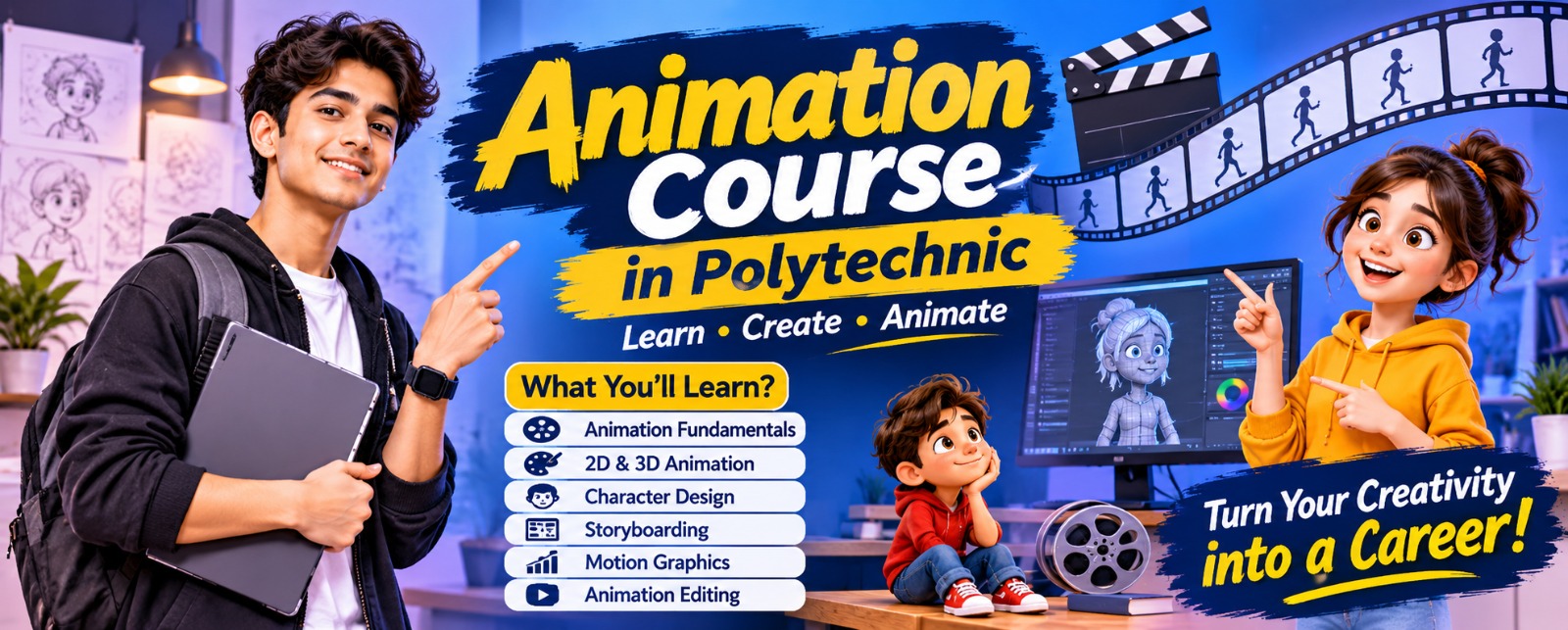
Animation Course in Polytechnic
Animation is an exciting part of the creative and digital media industry. It is used in films, television programmes, advertisements, video games, educational content, social media videos and digital presentations. Animation helps bring ideas, characters and stories to life through movement and visual effects. As digital content continues to grow, creative professionals with animation skills can explore opportunities in different industries.
Hanumant Technology, established in 2018, is an IT company and training institute focused on technology education and practical skill development. Students interested in creative design and digital media can explore the Animation Course in Polytechnic to understand animation principles, character movement, visual storytelling and digital production techniques. Learning these concepts can help beginners develop their creative abilities and build a foundation for further learning.
Why Learn Animation?
Animation combines creativity, design and technology to create moving visuals. It is widely used by entertainment companies, advertising agencies, gaming studios, educational platforms and digital marketing businesses. From simple animated graphics to detailed character sequences, animation has many applications.
Contact Us Now
Students exploring Animation Training in Polytechnic can learn how visual elements are designed and brought into motion. They can understand movement, timing, composition and storytelling. A structured Animation Course in Polytechnic can introduce learners to creative concepts and help them understand the different stages involved in producing animation.
Learning animation can also improve observation, imagination and visual problem-solving skills. A suitable Animation Institute in Polytechnic should help students understand the connection between creative ideas and technical execution.
What Will You Learn in Animation?
An animation programme generally introduces learners to design fundamentals, animation techniques and digital production workflows. The exact topics and software may vary according to the current course syllabus.
Important learning areas may include:
- Animation Fundamentals: Understand the principles of movement, timing, spacing and visual storytelling.
- Drawing and Design Basics: Learn basic shapes, proportions, composition and visual development.
- 2D Animation: Explore how characters and objects are created and animated in two-dimensional environments.
- 3D Animation Introduction: Understand basic three-dimensional objects, modelling concepts and movement.
- Character Design: Learn how to develop characters with suitable shapes, expressions and visual features.
- Storyboarding: Understand how scenes are planned and organised before animation production.
- Motion Graphics: Explore animated text, shapes and visual elements used in advertisements and digital content.
- Animation Editing and Exporting: Understand how animation sequences are arranged, reviewed and prepared for different platforms.
Through Animation Training in Polytechnic, learners can gradually understand these topics. A practical Animation Course in Polytechnic should also include exercises that allow students to apply animation principles through creative assignments.
Importance of Practical Animation Training
Animation is a skill that develops through regular practice and experimentation. Students need to understand how objects move, how characters express emotions and how scenes communicate a story. Practical exercises can help learners improve their timing, creativity and technical understanding.
Students considering Animation Coaching in Polytechnic should look for a learning environment that supports practical assignments, feedback and guided activities. Creating simple animated scenes, character movements and motion graphics can help beginners understand the animation process.
A good Animation Institute in Polytechnic should explain both the creative and technical aspects of animation. Learners can ask about software coverage, practical sessions, project work and portfolio development before choosing a programme. Proper guidance through Animation Training in Polytechnic can help students understand concepts step by step.
Why Choose Hanumant Technology?
Hanumant Technology was established in 2018 as an IT company and training institute. It focuses on technology education and skill development for students interested in different areas of the IT and creative industries.
Students searching for Animation Training in Polytechnic can contact Hanumant Technology to enquire about current course availability, syllabus details and training arrangements. Before enrolling, learners should confirm the course duration, fees, batch timings and practical learning facilities.
When comparing an Animation Institute in Polytechnic, students should review the curriculum, teaching approach and opportunities to work on creative projects. Learners interested in Animation Coaching in Polytechnic can also enquire about trainer guidance, doubt-clearing support and assignment feedback.
A suitable Animation Course in Polytechnic should match the learner's interests and provide opportunities to practise different techniques. Students can also ask whether the programme includes 2D animation, 3D concepts, character design or motion graphics.
Who Can Join an Animation Course?
Animation can be explored by students, graduates, beginners and working professionals who have an interest in creativity, design and digital media. Basic computer knowledge can be helpful, while animation techniques can be learned gradually through structured practice.
The Animation Course in Polytechnic may be useful for:
- Students interested in creative and digital media skills.
- Beginners who want to understand animation fundamentals.
- Drawing and design enthusiasts interested in digital production.
- Content creators who want to explore animated videos.
- Digital marketing learners interested in motion graphics.
- Working professionals looking to expand their creative knowledge.
People comparing an Animation Institute in Polytechnic should consider the syllabus and practical project opportunities. Similarly, Animation Coaching in Polytechnic may be suitable for learners who prefer guided instruction and regular feedback.
Career Opportunities After Learning Animation
Animation skills are used in film production, television, gaming, advertising, education, digital marketing and multimedia companies. Depending on their abilities and portfolio, learners may explore roles such as Junior Animator, 2D Animator, 3D Animation Assistant, Motion Graphics Designer, Character Design Assistant and Multimedia Designer.
Students can strengthen their profiles by creating a portfolio containing animated scenes, character movements, storyboards and motion graphics. A useful Animation Training in Polytechnic programme can introduce learners to important creative concepts and production methods. However, completing a course does not guarantee employment. Consistent practice, creativity and project experience are important for professional growth.
Start Your Animation Learning Journey with Hanumant Technology
Animation offers an opportunity to combine imagination, design and technology. Learning movement, storytelling, character design and digital animation techniques can help students build a foundation for exploring the creative media industry.
If you are looking for an Animation Course in Polytechnic, contact Hanumant Technology to enquire about the current programme and admission details. Students searching for Animation Training in Polytechnic, Animation Institute in Polytechnic or Animation Coaching in Polytechnic should review the syllabus, software coverage, practical activities, fees and batch availability before choosing a course.
Start learning animation fundamentals, practise different techniques and develop a portfolio of your creative work. With regular learning and practical experience, you can prepare yourself to explore opportunities in the growing animation industry.
FAQs Animation Course in Polytechnic
Q1. What is Animation?
Animation is the process of creating moving visuals by displaying a sequence of images or digitally designed frames.
Q2. What will I learn in an Animation Course?
You may learn animation fundamentals, 2D animation, 3D concepts, character design, storyboarding and motion graphics.
Q3. Is Animation suitable for beginners?
Yes, beginners can learn animation step by step with basic computer knowledge, creativity and regular practice.
Q4. What is the difference between 2D and 3D Animation?
2D Animation creates movement in a two-dimensional space, while 3D Animation uses three-dimensional models and environments.
Q5. Which software is used for Animation?
Software may include Blender, Adobe After Effects and other animation applications, depending on the course syllabus.
Q6. Do I need drawing skills to learn Animation?
Basic drawing skills can be helpful, but beginners can gradually develop design and animation abilities through practice.
Q7. Who can join an Animation Course?
Students, graduates, beginners, content creators and creative enthusiasts interested in digital media can explore this course.
Q8. What career opportunities are available after learning Animation?
Learners may explore roles such as Junior Animator, 2D Animator, 3D Animation Assistant and Motion Graphics Designer.
Q9. Is a portfolio important for an Animator?
Yes, a portfolio showcases creative abilities through animated scenes, character movements, storyboards and motion graphics projects.
Q10. How can I enquire about Animation admission?
Contact Hanumant Technology to ask about the current syllabus, software coverage, course duration, fees, batch timings and admission process.